 Industrials Limited
Mar 02, 2026
Steel Partitioning in Industrial Environments: Strength Meets Flexibility
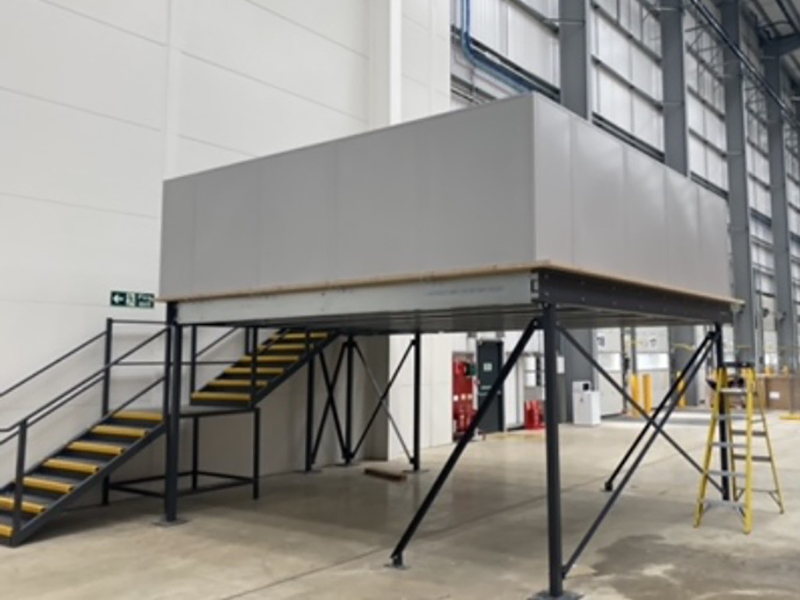
Explore industrial partitioning systems for warehouses and factories. Learn how steel and mesh partitioning improves security, safety and space efficiency.
As industrial and warehouse operations grow, the need to organise space efficiently becomes increasingly important. Open-plan facilities offer flexibility, but without structured separation, they can quickly become inefficient, unsafe, or difficult to manage.
Industrial partitioning provides a practical solution, allowing businesses to create defined zones within existing buildings without the cost and disruption of permanent construction. From secure storage areas to enclosed production zones, modern industrial partitioning systems combine structural strength with adaptable design.
In industrial environments where safety, workflow, and compliance matter, steel partitioning offers a balance of durability and flexibility.
Why Partitioning Matters in Industrial and Warehouse Settings
Warehouses and manufacturing facilities are dynamic spaces; inventory levels change, production lines expand, teams grow, and operational requirements evolve. Without effective physical separation, this can lead to congestion, security risks, and inefficient use of floor space.
Industrial partitioning allows businesses to segment areas for specific functions.
These may include:
• secure storage cages
• tool cribs
• quality control zones
• offices within warehouse floors
• protected machinery areas
Unlike traditional brick or block walls, industrial partitioning systems are designed to integrate within existing structures. They provide clear boundaries while maintaining flexibility for future reconfiguration.
The Strength of Steel Partitioning
Steel is one of the most reliable materials for industrial separation systems. Warehouse steel partitioning delivers durability in environments where impact resistance and structural integrity are essential.
Industrial metal partition walls are built to withstand the demands of busy warehouse operations, including forklift movement, pallet handling, and heavy equipment use. The rigidity of steel framing ensures long-term performance while reducing maintenance requirements compared to lighter materials.
In addition to strength, steel partitioning offers enhanced security. For facilities storing high-value goods or controlled items, robust industrial partitioning systems provide physical protection alongside controlled access points.
Types of Industrial Partitioning Systems
There are several forms of industrial partitioning available, each suited to different operational needs.
Solid steel panel systems create fully enclosed spaces, ideal for secure storage, private working areas, or noise reduction. These industrial metal partition walls offer both visual privacy and environmental separation, making them suitable for enclosed workshops or contained production zones.
Warehouse mesh partitioning, by contrast, provides security while maintaining visibility and airflow. Mesh systems are commonly used for storage cages, equipment enclosures, and segregated stock areas. Because they allow light and ventilation to pass through, they are particularly effective in large warehouse environments where full enclosure is unnecessary.
Modular industrial partitioning systems also allow for adaptable layouts. Sections can often be extended or adjusted as operational needs evolve, making them suitable for businesses expecting growth or layout changes.
Enhancing Safety and Compliance
Safety is a primary consideration in any industrial environment. Effective industrial partitioning contributes to safer working conditions by clearly separating pedestrian walkways from operational zones, isolating hazardous equipment, and restricting unauthorised access.
Warehouse steel partitioning can be integrated with access control systems, lockable doors, and reinforced panels to manage movement within the facility. This is particularly important in environments where sensitive stock, specialist tools, or regulated materials are stored.
In some applications, industrial metal partition walls also assist with fire protection strategies by creating controlled compartments within larger buildings. While partitioning is not a replacement for structural fire-rated walls where required, properly specified systems can form part of a wider compliance approach.
Working with experienced suppliers ensures industrial partitioning systems are designed in line with relevant building and safety regulations.
Flexibility Without Permanent Construction
One of the key advantages of modern warehouse steel partitioning is that it avoids the need for permanent building alterations. Traditional construction methods can be costly, time-consuming, and disruptive to ongoing operations.
Industrial partitioning systems are typically installed with minimal structural changes to the existing building. This reduces downtime and allows businesses to continue operating during installation.
Furthermore, because many systems are modular in design, they can be relocated or reconfigured if operational requirements change. This flexibility makes industrial partitioning particularly valuable for expanding businesses or facilities that regularly adapt to seasonal demands.
Warehouse mesh partitioning, for example, can be expanded as storage requirements grow, while solid steel panel systems can be adjusted to create larger or smaller enclosed areas.
Applications Across Industrial Environments
Industrial partitioning is used across a wide range of sectors, including manufacturing, logistics, automotive facilities, and distribution centres.
In warehouse settings, partitioning often defines secure stock zones, segregates high-value inventory, or creates controlled dispatch areas. Warehouse steel partitioning can also form enclosed picking stations or returns processing areas within open-plan spaces.
In manufacturing environments, industrial metal partition walls may separate fabrication zones, isolate noisy machinery, or create contained quality control areas. Partitioning can also support the integration of internal offices or meeting spaces within industrial units.
The adaptability of industrial partitioning systems ensures that separation solutions can evolve alongside the business.
Balancing Strength and Adaptability
The effectiveness of any industrial partitioning solution lies in achieving the right balance between strength and flexibility.
Steel-based systems deliver the structural resilience required in demanding industrial environments. At the same time, modular design principles ensure that warehouse steel partitioning does not restrict future development.
Whether installing warehouse mesh partitioning for secure storage or solid industrial metal partition walls for enclosed working areas, businesses benefit from solutions that enhance organisation without sacrificing adaptability.
Choosing the Right Industrial Partitioning Approach
Selecting the appropriate industrial partitioning system begins with understanding how the space is used. Factors such as traffic flow, security requirements, load impact risks, and future expansion plans all influence design decisions.
Facilities that require high levels of security and durability may benefit from reinforced warehouse steel partitioning. Where visibility and airflow are priorities, warehouse mesh partitioning may be more suitable. For environments demanding full separation and privacy, solid industrial metal partition walls provide enclosed solutions.
By working with specialists in industrial partitioning systems, businesses can ensure their separation strategy supports operational efficiency, compliance, and long-term growth.